Monday, October 14, 2013

How to eat: fats

How should we eat??

We should balance our intake of carbohydrates, proteins and fats

There is a lot of uncertainty with what types of fats are good and bad. This post will convince you to eat more fats, hopefully the healthy kind.

Fats: Fats play a huge role in your well-being. The unsaturated fats are ones that will help your heart, cholesterol, weight control, and overall wellness. 


Good fats to include in a meal:
Oils: olive, peanut, sesame, sunflower, soybean
Avocados
Olives
Nuts: almonds, peanuts, macadamia, hazelnuts, pecans, cashews
Peanut Butter
Sunflower, sesame, pumpkin and flax seed
Tofu
Fatty fish: salmon, tuna, mackerel, trout, sardines
Yogurt

**There have to be at least 2 things on this list you could get the next time you grocery shop.**

^Get her some fats^

Advice: don't cook with oil above level 6 heat on your stove, you will chemically alter the good fat into a less healthy alternative.

Practical takeaways:

Cook with olive oil rather than butter

Try eating avocados, they are loaded with fats that help the heart and brain
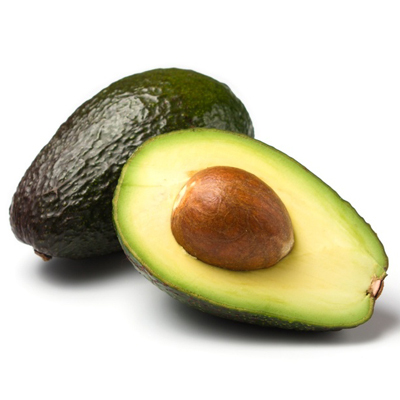
Instead of a granola bar, pack a snack of nuts, but be mindful of the ingredients (should just contain un-roasted nuts)


The ingredients on the peanut butter you are using should just be peanuts (and maybe salt)

Easy on the salad dressing, there are so many bad ingredients in it for you!
.. maybe you could make your own!

Avoid the trans fats, which are usually found in: baked goods, fried foods, snack food (chips, popcorn and candy), pre-mixed products (pancake, cake, drink mixes), and solid fats like stick margarine

Take the challenge and eat more unsaturated fats this week. Notice how much longer you stay full, how much less cranky you feel, and how much more energy you have.


Thank you for reading,
Mitch S.

Follow on Twitter: @Wellness_Gems

Monday, October 7, 2013

Hedonic Capacity and Positive Affect

In Psychology, there is a term for the ability to experience positive feelings, it is called your Hedonic Capacity. Originally developed by Paul Meehl in his 1975 research, he states

"Clinicians and theoreticians ought to consider seriously the possibility that not only are some people born with more cerebral 'joy-juice' than others but also that this variable is fraught with clinical implications".
(Meehl, 1975)

Pictured above is Paul Meehl, there is no guarantee that he actually had a high hedonic capacity, he just developed research on the topic.


From this original research, the psychological concept has been slightly altered to...

Positive Affectivity- as the extent to which an individual experiences positive moods such as joy, alertness and interest (Watson 2002).

In 1988, Watson, Clark and Tellegen developed the Positive and Negative Affect Schedule (PANAS), which is a simple questionnaire that allows you (and potentially others) to better understand your emotion. (it can take less than 5 minutes)

CLICK TO TAKE THE PANAS

It is important to note that positive emotion and negative emotion are independent of each other. You could be high in both positive and negative affect, or low in both.


Their research has discovered these typical traits of those found with high positive activity:
  • married
  • happy
  • socially active
  • have more friends and acquaintances
  • more likely to be involved in social organization
  • describe themselves as religious or spiritual
Yes, it seems almost obvious and straight forward, but isn't it rather reassuring that scientific data backs this up? This isn't me just theorizing what will "get you feeling happy", but rather it is a discovery rooted in empirical data that has real-life application. The PANAS is used as a psychological measure by many institutions in our society. It allows a rather simple, yet profound look into the mind and emotions of anyone willing to participate.

I find it rather exciting to be alive and participating in this generation of psychological research. 
The past was filled with research on bad moods, irritability, depression, anxiety and the like. There is upcoming research that shies away from merely looking at the negative parts of human existence.

The unraveling of what makes life worth living is now seen as legitimate and worth exploring academically and empirically. More research is including new concepts like zest, vitality and enthusiasm. New words like these are being used to progress the scientific understanding of our minds.

The positive provides a lens a through which we can see the good that comes with the bad.

This upcoming week, build up that positive affect, and be like this person. 


-Mitch S.

Follow me on Twitter
@Wellness_Gems


Source of information:
Peterson, Christopher. A Primer in Positive Psychology. Oxford: Oxford UP, 2006. Print.

Wednesday, October 2, 2013

How to get the most out of our experiences....

Our memory is rather funny. We have two ways of experiencing and understanding the world around us.

Experiencing Self (moment to moment awareness)

and 

Remembering Self (summarizes what we experienced)

Spoiler Alert: They don't come to the same conclusion

Developing our awareness of the "experiencing self" is crucial. If we can develop our "experiencing self", as we experience our memories (with our "remembering self") we can consciously enjoy them.

If our remembering self is more apparent than our experiencing self, our minds can get caught up in the memory and our present mood can even be altered without us even realizing it.

How about a psychological term to help us greater understand.......

Peak-End Theory: Memory of past pleasure is most influenced by 1. the most intense experience, and 2. how the experience ended.


Next time you go to a show, plan a night out, or prepare for any experience, keep this in mind.

Your remembering self will summarize the experience by the "peak" moment, and how the end of the experience was. Be conscious of this with your experiencing self, and your remembering self will retrospectively appreciate the experience that much more.

So how can we better understand this to bring more psychological wellness into our lives???

LEARN TO SAVOR THE MOMENT
These are 4 ways humans can upgrade their experiencing self.

Basking- This involves being conscious of the exposure of praise-like emotions.

Luxuriating- Involves indulging in the senses, to thoroughly "take-in" the experience.

Marveling- Occurs when we lose ourselves in the wonder of the moment.

Thanksgiving- Expression of gratitude for blessings.


Thank you for reading
-Mitch S.

Saturday, September 28, 2013

Psychological Wealtn & Flow

Psychological Wealth & Flow
(the stacks of resources, and upward pointing arrow is symbolic of your growing psychological wealth you are gaining by reading this blog)


Psychological Wealth has been developed through the research of Dr. Ed Diener. He is helping the field of Psychology better understand what it takes to live the good life. He has suggested a list of aspects with which we may identify with.

Advice: Score each of the following from 1-10 in how much you notice the aspect in your life.

Life Satisfaction/Happiness

Spirituality and Meaning in Life

Positive Attitudes and Emotions

Loving Social Relationships

Engaging Activities (Experience of Flow)

Values and Life Goals to Achieve Them

Physical and Mental Health

Material Sufficiency to Meet Needs


Now that you have scored these 8 aspects, see which you identify with the most and least. Personally, I need to work on developing more loving social relationships (not that I don't have any, I just know I could use more).

I have become better at the aspect of engaging activities, and experiencing flow. Wikipedia defines flow as: The mental state of operation in which a person in activity is fully immersed in a feeling of energized focus, full involvement and success in the process of the activity.

It can be better understood through this visual diagram.

Next time you find yourself thinking time is "flying", try to take in how it feels to be in a state of flow. Enjoyment can be derived from mundane things if one is able to develop their awareness of flow.

The more you are aware of it, the more you will experience it. Check out Mihaly Csikszentmihalyi if you want more knowledge of his psychological concept of flow.

Thank you for reading,

Stay psychologically wealthy my friends

- Mitch S.

Wednesday, September 25, 2013

What do you know about positive emotion?

There is an emerging field in the realm of psychology. This field is labeled "Positive Psychology". 
Before any confusion arises, here is a working definition.

Positive psychology - "the study of what goes "right" in life. Excellence and goodness are just as authentic as disease, disorder and distress." (Peterson 2006)

This does not mean that as I type, my reality looks like this..

Rather...
This week's blog will focus on the question "What makes life worth living?"

Barbara Fredrickson first theorized that positive emotion functions differently for the human being than negative emotion. Joy, interest, contentment and love must be looked at through a different lens.

Negative emotions narrow us
Negative emotions are advantageous, and helped our ancestors adapt to the environment. This is practical and beneficial given the right circumstances. The problem occurs when the body unnecessarily anticipates danger. This signal of perceived danger activates the sympathetic system, pumping epinephrine and norepinephrine through our bloodstream. If the body stays under this kind of stress, it may manifest in physical illness.

Positive emotions signal safety to us
Fredrickson's 2003 research shed light on cognitive changes that result from positive emotions. Some of the cognitive changes include: broader attention, greater working memory, enhanced verbal fluency, and increased openness to information.
Again in 2005 Fredrickson and Branigan conducted research to assess global-local visual-processing. Holding positive emotion literally opens the body physiologically, while holding negative emotion narrows us.

This leads us to our takeaway note,

Broaden-and-build theory: positive emotions broaden psychological and behavioral repertoires and build psychological resources.


*Keep this in mind next time you have a creative task at hand. Do your best to get into a state of positive emotion first*

Exercise:
Can't think of any positive emotions? 
Start with GRATITUDE
Tell yourself 3 things you are grateful for that happened today or yesterday.
Then ask yourself why each of those things happened.

If you still aren't feeling positive, maybe this will brighten your day..


Thank you for reading
- Mitch S.

Sources:
Fredrickson, B.L. (2003). The value of positive emotions. American Scientist, 91, 330-335.
Peterson, Christopher. A Primer in Positive Psychology. Oxford: Oxford UP, 2006. Print.

Sunday, September 22, 2013

Dedication Post...

This is my first post, it will be my dedication post. I am dedicating this blog to spreading communal well-being. Over the next few months, I will post weekly entries, regarding various aspects of psychology and wellness. I strive to make the posts as simple, applicable, and fascinating as possible.

First and foremost, THE MIND-BODY CONNECTION

This information is a crucial first step to understanding and applying well-being in our lives. The theory behind the mind-body connection is that our thoughts play out physiologically in our body. Also, our physiological responses effect our thoughts. This is especially apparent when we look at anxiety, stressors in our environment, and our immune system functioning.

Research from Dr. Littrell's 2008 article on the mind-body interaction give us empirical evidence of a connection. The article gave the conclusions:
  • Stressful emotions hinder the functioning of our white blood cells in our immune system.
  • If one is experiencing stress, vaccinations will be less effective.
  • Stressed individuals' wounds heal slower. 

These discoveries provide more evidence that the realm of psychology is expansive, and the future is bright.

Let's apply...

Feeling anxious, depressed, or just spaced-out?

Try the following breathing exercise to calm yourself, and bring awareness to the present moment.

Mind-Body Breathing Exercise

  • Be aware of your current breathing pattern and learn how to change your breathing rate from fast, shallow chest breathing to slow, abdominal breathing.

  • Focus on your breath while you place one hand on your chest, the other over your navel. Imagine there is a balloon in your abdomen. As you take a slow, deep breath, focus on inflating the balloon in your abdomen. You will notice that your abdomen will rise much more than your chest. As you exhale, just let your abdomen fall naturally.

  • The goal is to learn how to breathe at 6 breaths a minute, about 3 or 4 seconds inhaling and 6 or 7 seconds exhaling. Once you have the slow, deep breathing accomplished, don’t worry about counting and imagine breathing out any tension in the body or thoughts that get in the way of comfort and relaxation.


  • If it helps, you can imagine a spot located on your abdomen, just below your navel. Breathe into and through that spot, filling your abdomen with air, allowing it to expand. Imagine the air filling you inside from your abdomen, and then let it out, like deflating a balloon. With every long, slow breath out, you should feel more relaxed.


  • Mind-body breathing exercise was borrowed from Cleveland Clinic

    Diagram was borrowed from Merck Manuals

    Littrell, J. (2008). The mind-body connection: not just a theory anymore. Social Work in Health Care, 46(4), 17-37.


    Notice how relaxed you have become.
     
    Take this feeling with you the rest of the day.

    Next time you feeling rigid, stuck, or stressed, ask yourself, "how have I been breathing?"

    Thanks for reading,

    -Mitch